


Soaring demand for data centers and growing constraints on Earth's resources have pushed the industry to consider a new frontier: space.
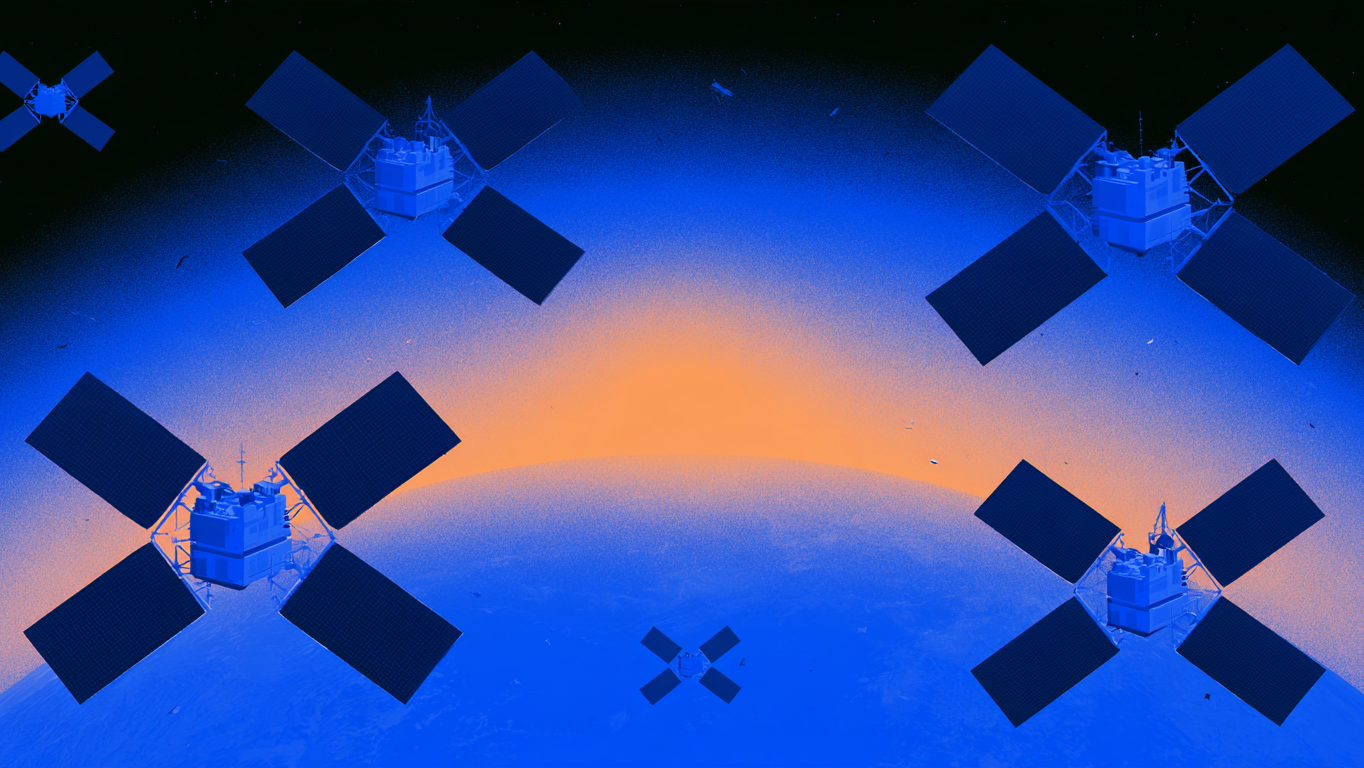
Google has been a major proponent of this movement with Project Suncatcher, a research mission designed to determine whether low Earth orbit is a suitable host for scalable, solar-powered data centers. After launching it's first prototype satellite with SpaceX in early October, the company is celebrating the first ever-AI response from a data center-class TPU in orbit.
Google shared that, during a ground-station pass, it uplinked its first prompt to the onboard Gemma 4 open model and asked it to generate a haiku about being in space. Then, as the satellites passed Svalbard, Norway, it shared the downlinked poem. Next steps include verifying how the TPUs perform under thermal stress and radiation exposure in orbit, but the fact that the chips could execute prompts in space is an important step in the research moonshot.
Supporters of building data centers in space cite natural limitations of building AI infrastructure on Earth, including physical space, local power grid capacity, clean water, and the disruption to communities that don't want it. However, many debate whether data centers in space are a viable alternative, as low Earth orbit is also becoming increasingly populated.
Currently, SpaceX has about 11,000 active satellites in low Earth orbit and is part of a growing network that includes Amazon Leo, as well as Qianfan and Guowang in China. Low Earth orbit is also home to some longer-standing fixtures, such as the International Space Station. And this number is only bound to increase, following reports that Russian President Vladimir Putin is developing an alternative to Starlink after praising Elon Musk as a "genius."
While physical space constraints aren't necessarily a concern in space, experts are also concerned about the availability of safe, collision-free orbital paths. This is exacerbated by the fact that orbital data centers would require an unprecedented number of satellites, on the order of hundreds of thousands to a million new devices.
Additionally, space debris is a growing problem that can have long-term impacts. According to Kessler syndrome, as fast-moving objects collide, they shatter into thousands of high-velocity fragments, causing more collisions and debris and reaching a point where certain orbital areas become unusable for generations. A recent Bloomberg report cites another concern: catastrophic conflict in space, in which people attack targets with missiles, cyberattacks, or other means. In that scenario, the potential for orbital debris becomes even greater.
Our Deeper View
This represents an outlandish solution to a very real problem: Amid unprecedented AI demand, the industry is running out of data centers and the resources to power them. But it also raises bigger questions: How much AI infrastructure do we actually need? Additionally, when do we seek another path, whether that’s making models more optimized and efficient or simply slowing down until the infrastructure can catch up? It isn’t just about running out of space and the world’s resources — It’s also about the hundreds of billions of dollars being poured into this buildout. We may one day realize much of it wasn’t necessary, and that shifting our focus to creating more efficient models themselves could have taken the industry farther.